
Slow sink, gurgling pipe or full backup: reading the signs
Where a drain misbehaves says where the clog is. One slow fixture points to its own trap or branch. Several fixtures acting up together point to the main line.
| What happens | Likely location | What a plumber does first |
|---|---|---|
| One sink or tub drains slowly | The fixture trap or its short branch | Clears the branch with a cable and pulls out the clog |
| A toilet gurgles when a tub drains | A shared branch or the vent | Checks the branch, then the vent, with a camera if needed |
| Water comes up in a floor drain or tub when the washer runs | The main drain line | Opens the cleanout and sends a cable or jet down the main |
| A rotten smell returns after every cleaning | Residue in the pipe wall or a dry trap | Cleans the walls of the pipe and checks the trap seal |
| Every drain is slow after heavy rain | Groundwater or a failing line near the house | Camera inspection of the main line |
Callers also mention kitchen exhaust and grease drains in restaurants and shops. Commercial kitchens need a cleaning schedule more than a one-time clearing, and the business plumbing page covers those buildings.
Kitchen, tub and toilet clogs
Most homes have three clog habits. Kitchens catch grease and food, tubs catch hair and soap, and toilets catch too much paper or something that should not have been flushed.
Kitchen sink
Grease cools and coats the pipe wall, and food scraps stick to it. Hot water and soap help only at the start; a cable or jet clears what is left. Do not use a garbage disposal as a trash can.
Tub and shower
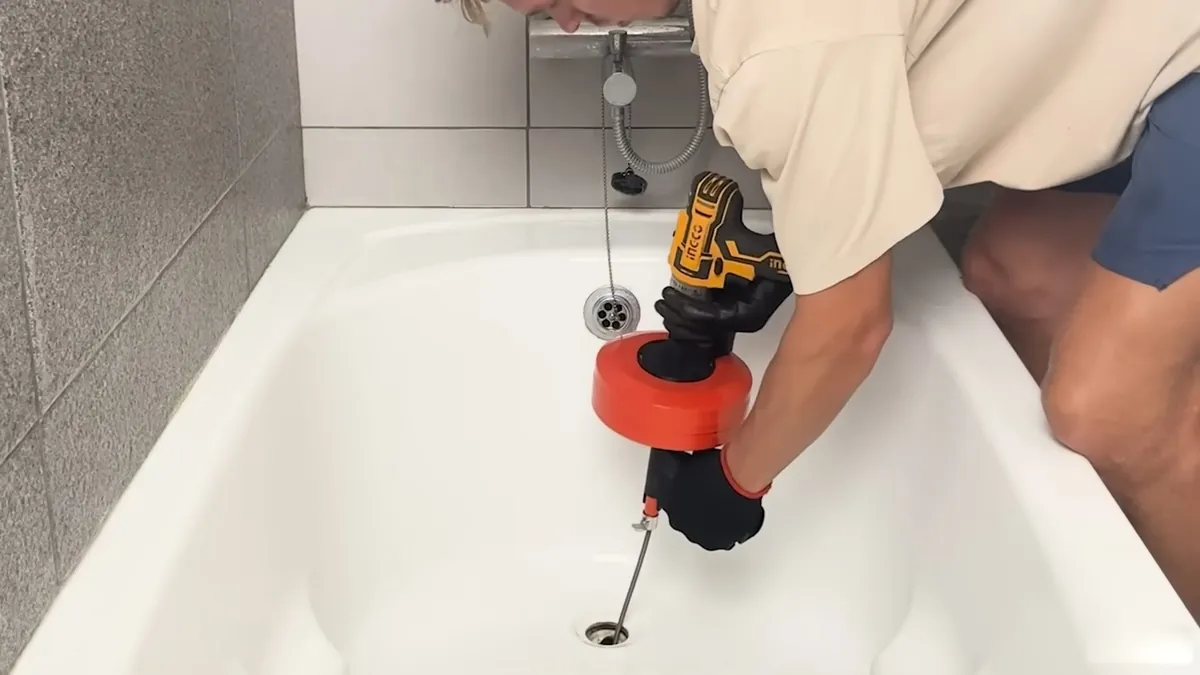
Hair binds with soap residue into a mat just below the stopper. A drain strainer helps, and pulling the clog out is better than pushing it down the pipe.
Toilet
A plunger with a good seal clears most paper clogs. If a plunger fails twice, stop, because forcing it can push the blockage into the branch and cause an overflow.
Safety note: Do not mix drain chemicals, and do not pour them into a standing sink that a plumber will open later. Backed-up wastewater is a health risk, so keep children and pets out of the area and wear gloves for cleanup.
If a toilet blockage keeps returning or the water level in the bowl rises when another fixture drains, the problem is probably past the toilet and a cable or camera is the next step.
How drain cleaning works from the trap to the main line
Cleaning starts at the closest access point. For a sink that is the trap or a cleanout under the cabinet; for a tub it is the overflow or a cleanout on the line; for the whole house it is the main cleanout, which is usually outdoors or in a basement or garage.
A plumber chooses the tool from what the symptoms suggest and from what the first pass finds. Surface clogs near a fixture need little more than a hand tool or a short cable. Deeper or older clogs need a longer cable, a jet or a camera first.
Persistent drain odors usually trace to residue left on the pipe wall or to a dry trap, so cleaning the wall and refilling the trap seal comes before any deeper search. If the smell returns again within weeks, a camera look is the next step.
- Ask where the access point is and whether the plumber will use the cleanout.
- Ask what came out of the line, so you know whether it was grease, roots, hair or something else.
- Ask whether a camera look is recommended after the clearing.
Drain backing up while you read this?
Snaking, rooter service and augers
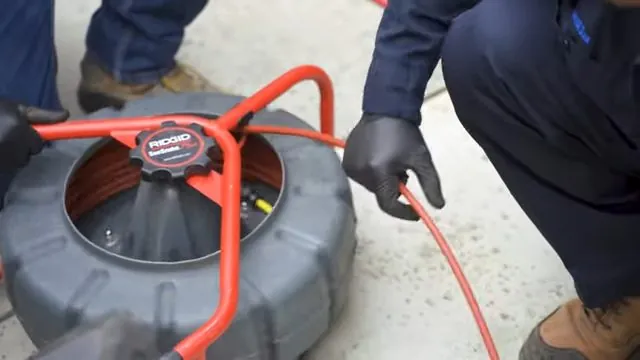
A cable, often called a snake, has a rotating head. The head bores through a clog or hooks it and pulls it out. A rooter cable has blades for roots. A hand auger is a short cable for a sink or tub.
Snaking is fast and works well on a single clog in a straight line. It leaves residue on the pipe wall, which is why a drain that was snaked can slow again. When clogs keep returning, the next method is jetting or an inspection of the line itself.
Hydro jetting: water pressure that scours the pipe
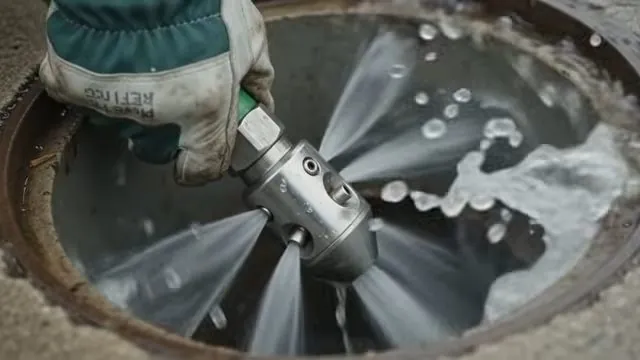
A jetting hose with a rotating nozzle sprays water at high pressure against the pipe wall. It cuts through grease, scale and light roots and flushes the debris down the line, which cleans the whole pipe, not just a hole through the middle.
Jetting is a good fit for repeat grease clogs and for main lines that back up in the same place. It is a poor fit for pipes with broken joints, and an inspection first shows whether the pipe can take it.
Main line backups and tree roots
When water comes back up in the lowest drain in the house, the main line is the likely culprit. Roots enter at joints looking for moisture and can narrow a pipe until it clogs. A camera shows them, and a root cutter or jet clears them for now.
If the main keeps clogging, or the camera shows a collapsed or offset section, cleaning is only a pause. The sewer line repair page covers repair and replacement.
Which sanitation district serves a Monument address varies, since the Tri-Lakes wastewater plant is jointly owned by the Monument and Palmer Lake sanitation districts and Woodmoor Water and Sanitation District. A plumber can tell whether the clog sits inside the property or beyond it, so the right party is called.
Water already spreading across a floor is urgent, and the urgent plumbing help on the home page is the place to start.
The same clog keeps coming back?
Drain pipe repair and cast iron
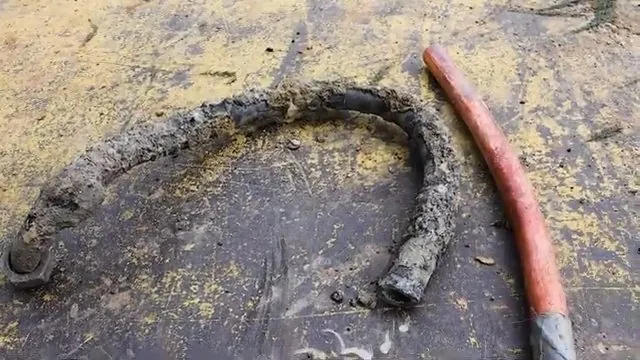
Older cast iron drains rust from the inside, and rough rust catches debris. Cast iron can also crack or separate at joints. A camera shows scale, cracks and offsets, and a plumber can describe whether the pipe can be cleaned and kept or whether a section should be replaced.
Repair choices run from a spot replacement of a bad section to relining or full replacement of a run. A repair is worth discussing when the same line clogs repeatedly, when the camera shows a crack or when water appears where it should not. Pipe repair for supply lines is a separate subject, covered on the pipe repair page.
Sump pumps and basement drainage
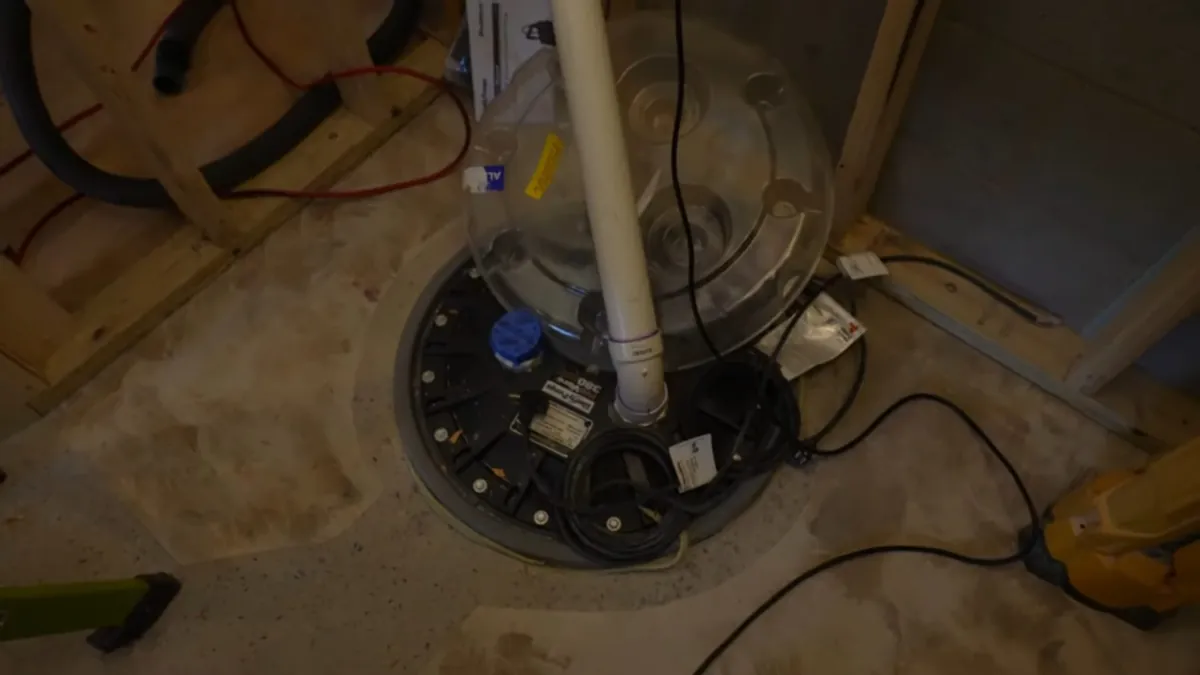
Basements and low floor drains add a drainage question to the clog question. A floor drain in a basement or utility room takes water from the washer, a leaking heater or groundwater, and a sump pump moves water out of a pit before it reaches the floor.
Pockets of groundwater are a reason to test a sump pump before a wet season, not after one.
- Pour water into the pit and confirm the pump starts and shuts off.
- Check that the discharge pipe is clear and carries water away from the house.
- Ask about a battery backup if the power goes out in storms.
A floor drain that smells can be a dry trap; pour water down it to refill the seal. If the smell returns, ask the plumber to check the line.
Drain cleaning questions from Monument callers
Straight answers on clogs, jetting, cameras and the drains people ask about most.
How do I tell whether a sump pump needs repair or replacement?
A pump that still runs but struggles with a clogged intake, a stuck float or a worn check valve is a repair candidate. A motor that hums without pumping, a cracked housing or a failure that keeps recurring points to a new pump.
A plumber can test it by filling the pit and watching a full cycle. Ask whether the discharge line is clear, because a blocked outlet mimics a failing pump.
Can a camera inspection find a clog cause without digging?
Yes. A small camera on a flexible cable travels through the line and shows roots, grease, a broken joint or a sagging section on a monitor, with the distance to the problem measured from the cleanout. That tells the plumber whether cleaning is enough or a repair is needed, before anything is dug up.
How long does it take to clear a bathtub drain?
A hair clog near the stopper is usually quick to pull out. A clog deeper in the line, past the trap, takes longer because the cable has to reach it and be pulled back out clean.
If a tub backs up only when another fixture drains, the blockage may be in a shared branch, and that changes both the time and the method.
How do I compare hydro jetting offers from different plumbers?
Ask each plumber: what pressure and nozzle will be used on this pipe material, whether a camera look comes first, whether a camera look follows to show the result, and what happens if the line is damaged.
One caution: jetting is not suited to every pipe. A line with broken joints or heavy scale can be harmed by high pressure, which is why the inspection comes before the jetting.
Why does my drain keep clogging?
Consider a kitchen sink that is snaked and clear for two weeks, then slow again. The usual cause is that a cable pokes a hole through the clog and leaves a coating of grease on the pipe wall, so the next layer builds quickly.
Repeat clogs also come from a rough or sagging pipe, roots entering a joint or too much going down the drain. A camera look and a thorough cleaning, not another quick snaking, is the way to stop the cycle.
Is a kitchen sink clog a snaking job or something else?
Do now: stop running water, do not pour chemical cleaners into a standing sink and look under the sink for a trap you can remove into a bucket. Can wait: a slow but steady drain can be scheduled, as long as it is not backing up into the other side of a double sink or the dishwasher.
A cable is the usual fix for a kitchen line. If the sink backs up in the washing machine standpipe or a nearby floor drain at the same time, the clog is further along and needs a longer cable or jetting.
Clear the clog and find out why it formed
- Licensed and insured plumbers
- Same-day service when available
- 24/7 emergency dispatch