
Hard water signs and testing
Hard water carries dissolved calcium and magnesium that leave scale behind. The signs show up in daily life long before the pipes show it.
- White or chalky buildup on faucets and showerheads.
- Spots and film on dishes and glassware.
- Soap that does not lather and skin that feels dry.
- Reduced flow from scaled aerators and shower heads.
- Water heaters that rumble or recover slowly.
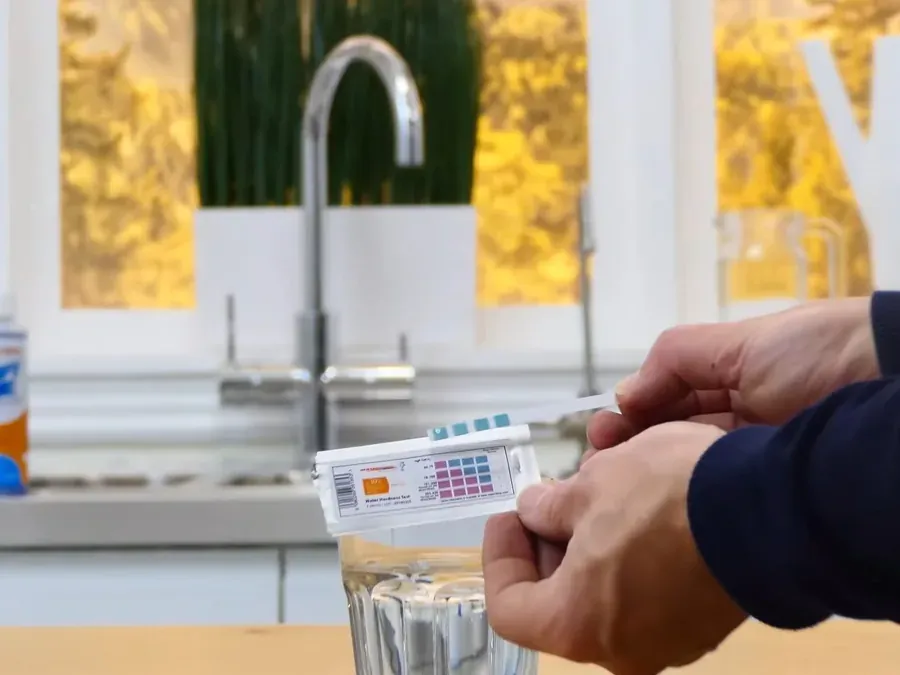
Scale shortens the life of heaters and appliances. The heater repair page explains what sediment does inside a tank. Check the supplier's hardness report for your address before choosing a system, since the number sets the size.
Softener, filter or reverse osmosis
| System | What it treats | What it does not do |
|---|---|---|
| Water softener | Hardness minerals that cause scale | Does not remove chlorine or most contaminants |
| Whole-house filter | Sediment, and chlorine with a carbon type | Does not soften the water |
| Under-sink filter | Taste and odor at one faucet | Treats one tap only |
| Reverse osmosis | Many dissolved solids in drinking water | Wastes some water and needs filter changes |
Treatment can be layered. A sediment filter in front protects a softener, and a drinking-water unit at the kitchen sink polishes the water you actually drink.
Softener not softening any more?
Softener repair and service
A softener that stops softening has usually run out of salt, bridged its salt, clogged its resin or lost power to the control head. Many of those are quick to fix.
- Check that the salt level is above the water line in the brine tank.
- Break up a hard crust of salt, called a bridge, with a broom handle.
- Confirm the unit has power and the control head is showing the right time.
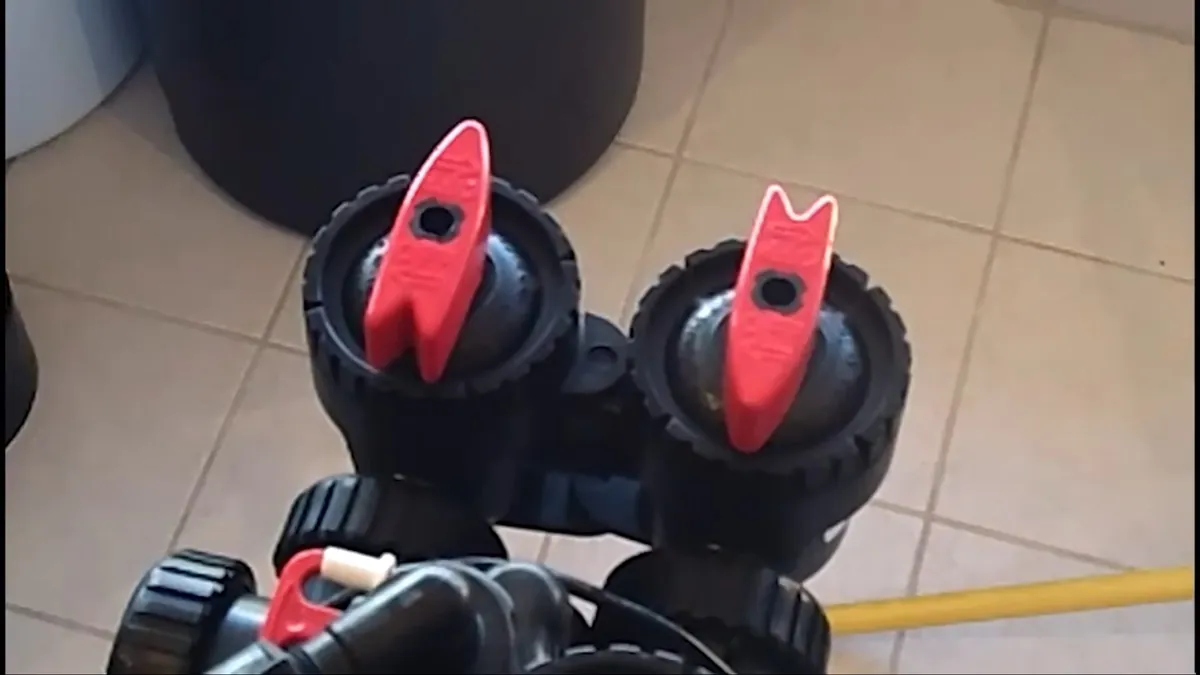
- Look for leaks at the bypass valve and the drain line.
A plumber tests the water before and after the unit, cleans the injector and the screen and rebuilds or replaces worn valves. Resin that has exhausted itself means the tank needs recharging or replacing.
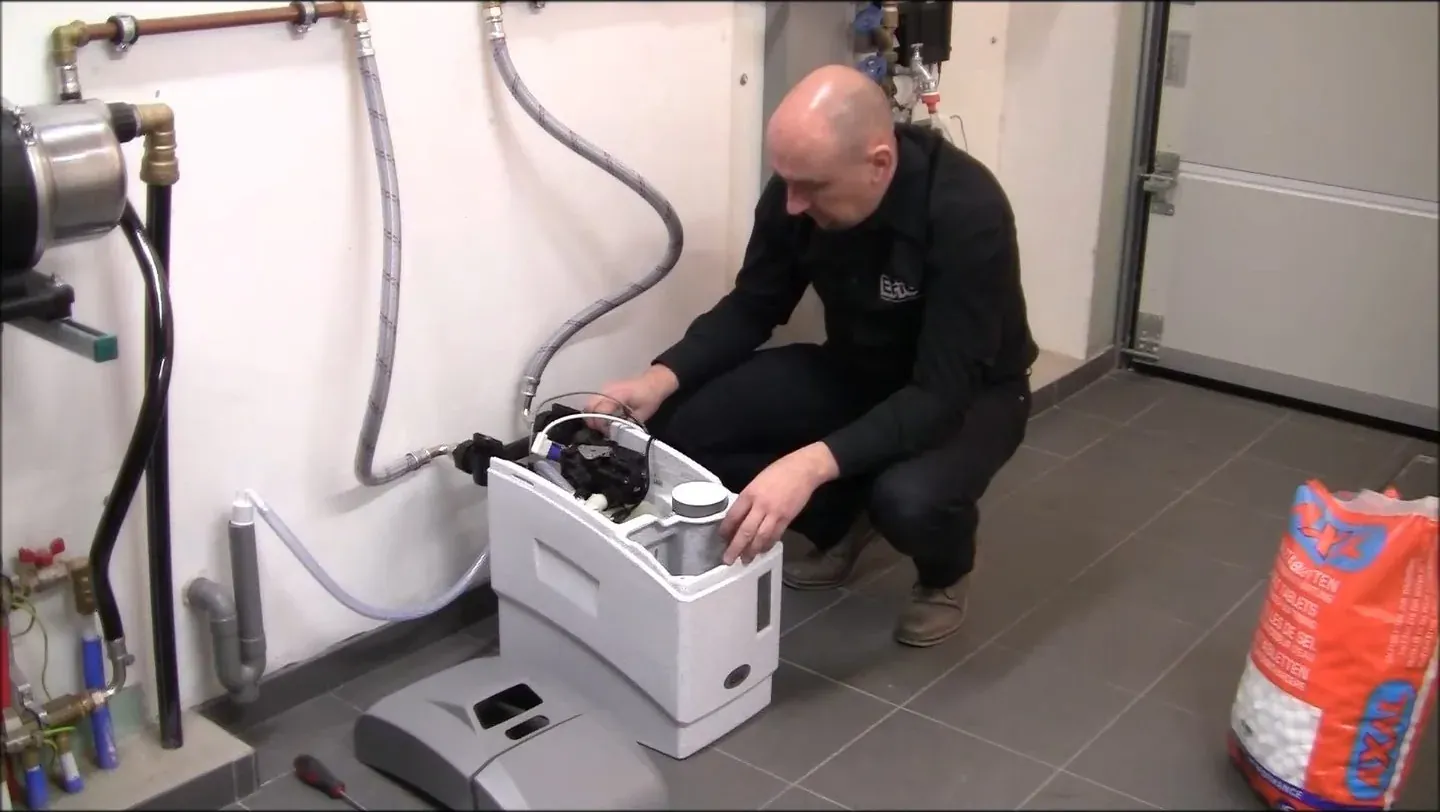
Installing a softener
A softener goes on the main water line, usually near the water heater, with a bypass valve and a drain for the regeneration water. The plumber picks a size from household water use and the hardness reading.
- Pick the spot. A level place near the main line with power and a drain.
- Cut in and connect. The main is tied in with a bypass, and the unit is plumbed in.
- Connect the drain. The regeneration line runs to a standpipe or floor drain with an air gap.
- Program and test. Hardness is entered, the unit regenerates once and the output is tested.
Salt choice matters little compared with keeping the tank filled. Pellets, cubes and crystals all work, and the maker's manual names what suits the resin. Potassium is an option for people who want to avoid sodium, and it works the same way.
Check local rules before running brine to a drain, since requirements vary by sewer district.
Reverse osmosis and drinking water filters
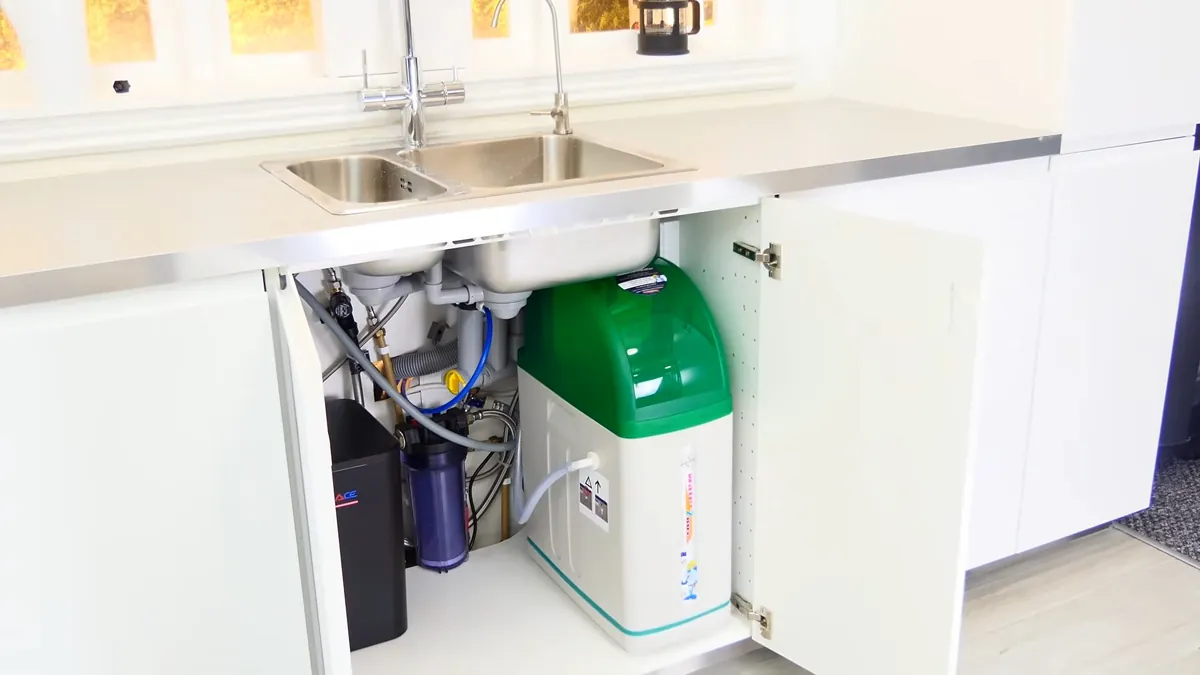
Under-sink filters and reverse osmosis units fit in the cabinet and feed a small faucet beside the main one. They clean the water you drink and cook with, and leave the rest of the house untreated.
Reverse osmosis pushes water through a membrane that holds back many dissolved solids. It needs a storage tank, a drain connection and filter changes. Skipping the changes defeats the purpose.
Filter changes are the part people forget. A cartridge that stays in too long slows the flow and can stop treating the water, so set a reminder on the calendar when the unit is installed and keep spare cartridges on hand.
Simple carbon filters improve taste and smell and are easy to maintain. Ask what the filter is rated to reduce and look for independent certification on the label.
Choosing between a softener and a filter?
Whole-house filtration and water conditioning
A whole-house filter sits where the main enters the home and treats everything downstream. Sediment filters catch sand and rust. Carbon filters reduce chlorine taste and odor.
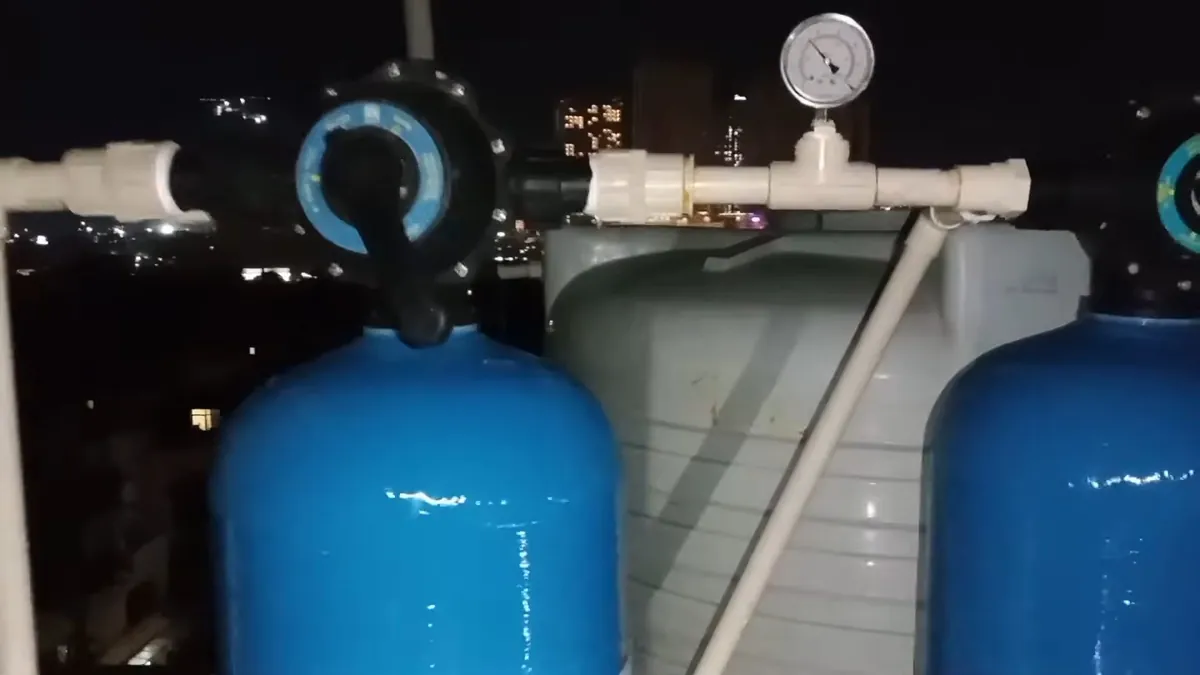
Water conditioners that claim to prevent scale without salt work differently from a softener and do not remove hardness. Ask for what the unit actually does, and compare it with the supplier's report.
Tankless heaters are more sensitive to scale than tanks. The tankless heater page explains why a flush and a softener matter for them.
Softener and filter questions
Short answers on hardness, filters and upkeep.
How do I find out how hard my water is?
Ask the water provider for its latest quality report, which lists hardness for the water it delivers. A home test kit gives a quick reading at your own tap.
Water providers in the Monument area differ, so use the report for the provider that serves your address and not a figure from another town.
Does a water softener remove chlorine or drinking water contaminants?
No. A softener swaps calcium and magnesium for sodium or potassium and protects pipes and appliances from scale. Taste, chlorine and contaminants need a filter or reverse osmosis.
Many homes use a softener for the whole house and a reverse osmosis unit at the kitchen tap.
How often should a softener be serviced?
Check the salt level every month or so, and have the unit looked at once a year or when the water starts to feel hard again. Resin wears out over time and valves can fail.
Testing the output tells a plumber whether a repair or a replacement is the more sensible route.
My softener overflowed or leaks near the drain. What now?
Turn the unit to bypass and shut the supply to it. An overflow usually means a clogged drain line, a stuck float or a failed valve in the control head. Wipe up standing water so it does not reach flooring.
The plumber checks the drain line for a blockage first and then the brine valve and the float.
Something fell into the brine tank. Can I reach in?
Do not put your hand in, because the tank may hold a deep column of brine and the unit can start a cycle. Put the unit in bypass and use a long tool such as a grabber to retrieve the item.
Items that dissolve or stick in the well can block the valve, so a plumber should check it afterward.
Is reverse osmosis worth it for drinking water?
It depends on what bothers you in the water. Reverse osmosis removes many dissolved solids and improves taste at one faucet. It also wastes some water as it works and needs filter changes on a schedule.
A supplier's report and a home test help decide whether it is a fit for you.
Fix the water problem at the source
- Licensed and insured plumbers
- Same-day service when available
- 24/7 emergency dispatch