
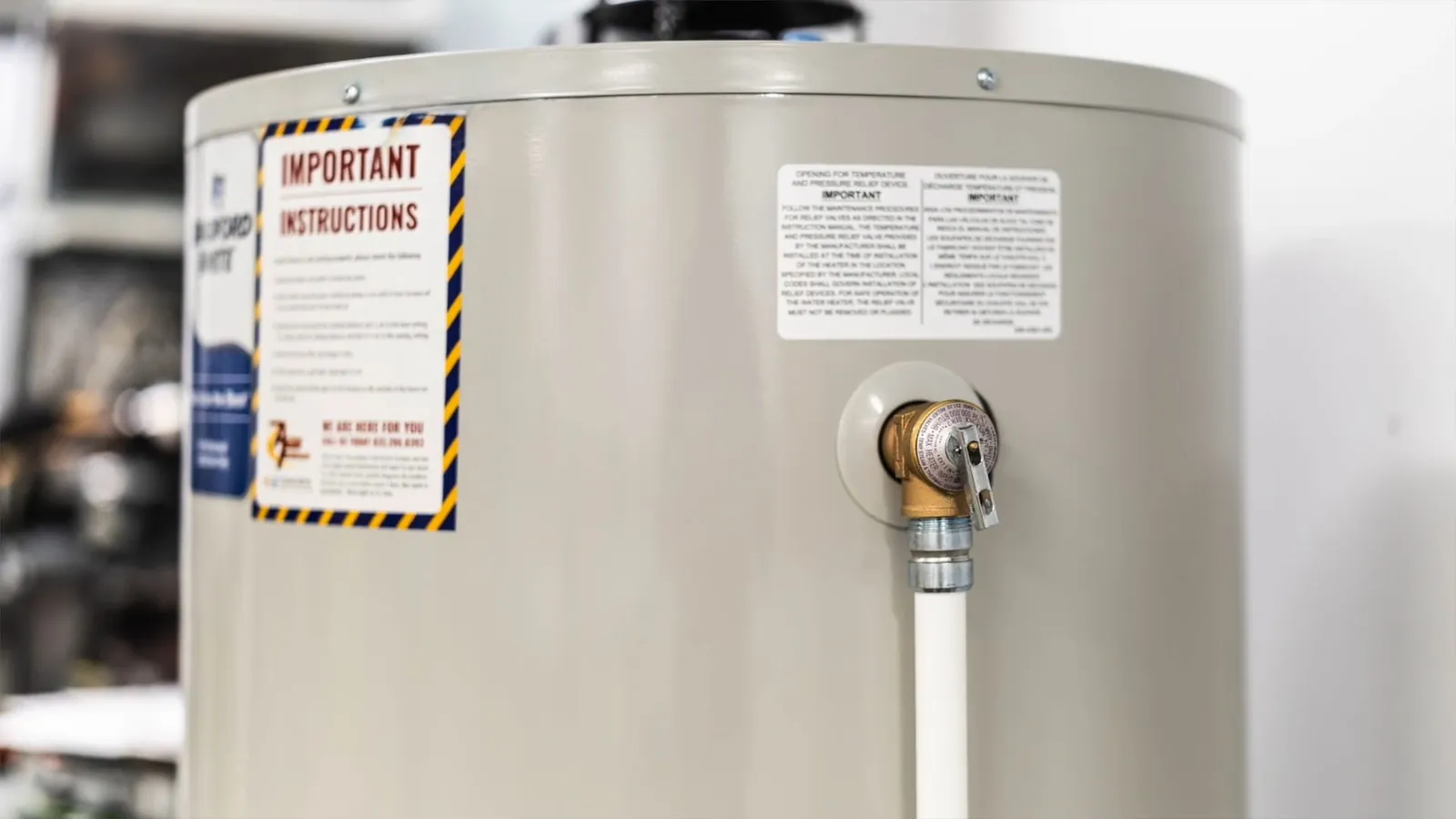
Signs it is time to replace the heater
Not every failing heater needs a new one, but some signs point strongly toward replacement.
- Water pooling at the base that comes from the tank body, not a fitting.
- Rust-colored hot water that does not clear after flushing.
- A repair history that keeps growing, with new parts failing one after another.
- Hot water that cannot keep up with the household, even with a healthy unit.
- A heater old enough that the maker no longer stocks its parts.
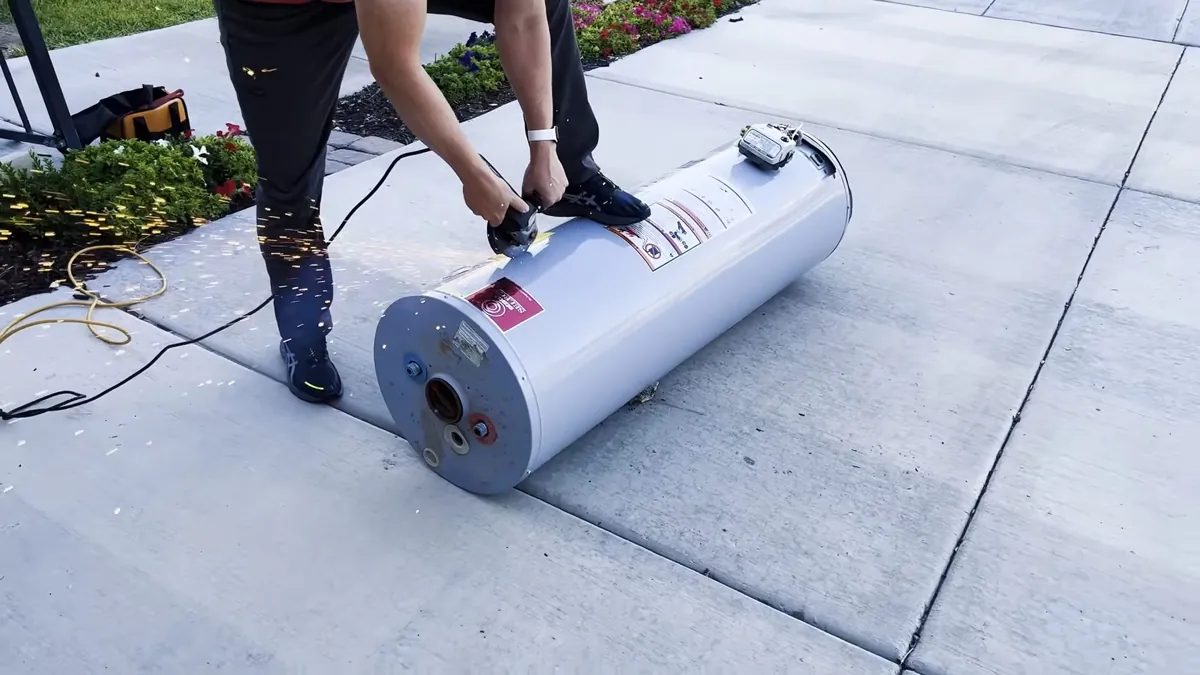
Safety note: A heater that smells of gas, shows scorching near the burner or has a relief valve discharging steadily should be handled right away. Close the gas valve only if it is safe to reach, and leave the building if you smell gas.
If the problem looks fixable, the water heater page lays out what a repair involves and where the repair-or-replace line falls.
Gas, electric, hybrid or heat pump: choosing the type
| Type | What it needs | Things to weigh |
|---|---|---|
| Gas tank | A gas line, a vent through the roof or wall and a combustion air supply | Venting and the gas supply matter most |
| Electric tank | A dedicated circuit and a drain pan, no vent | Simple to place, needs enough electrical capacity |
| Hybrid or heat pump | A circuit, floor space, air to draw from and a condensate drain | Larger and louder, with extra clearance needs |
| Point-of-use under-sink unit | A nearby outlet and a short supply line | Serves a single sink and not the whole house |
Installer choice affects the type too. Ask the plumber what is practical for your utility room before choosing, because a space that suits a vented gas unit may not suit a hybrid. Sizing comes from the number of people and the bathrooms, and the rating printed on the label shows how much hot water the unit delivers during a busy hour.
Tank leaking and a swap looks likely?
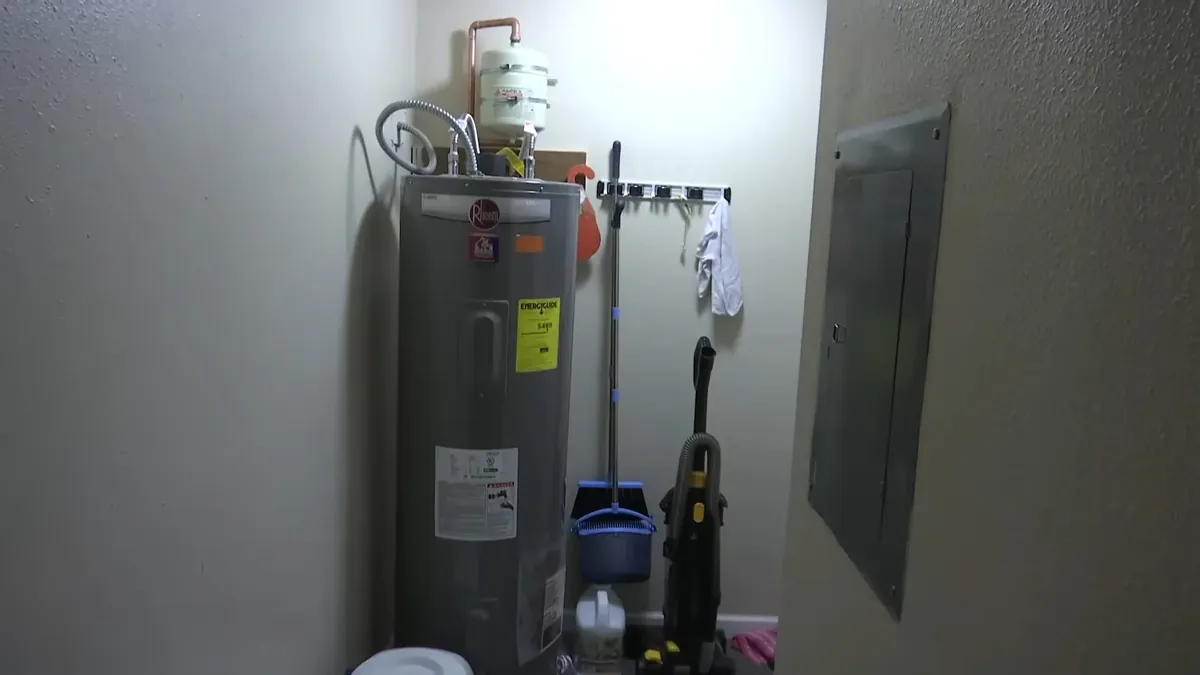
What a replacement visit involves
- Shut off and drain. Power or gas is turned off, the cold supply is closed and the old tank is drained to a floor drain or the outdoors.
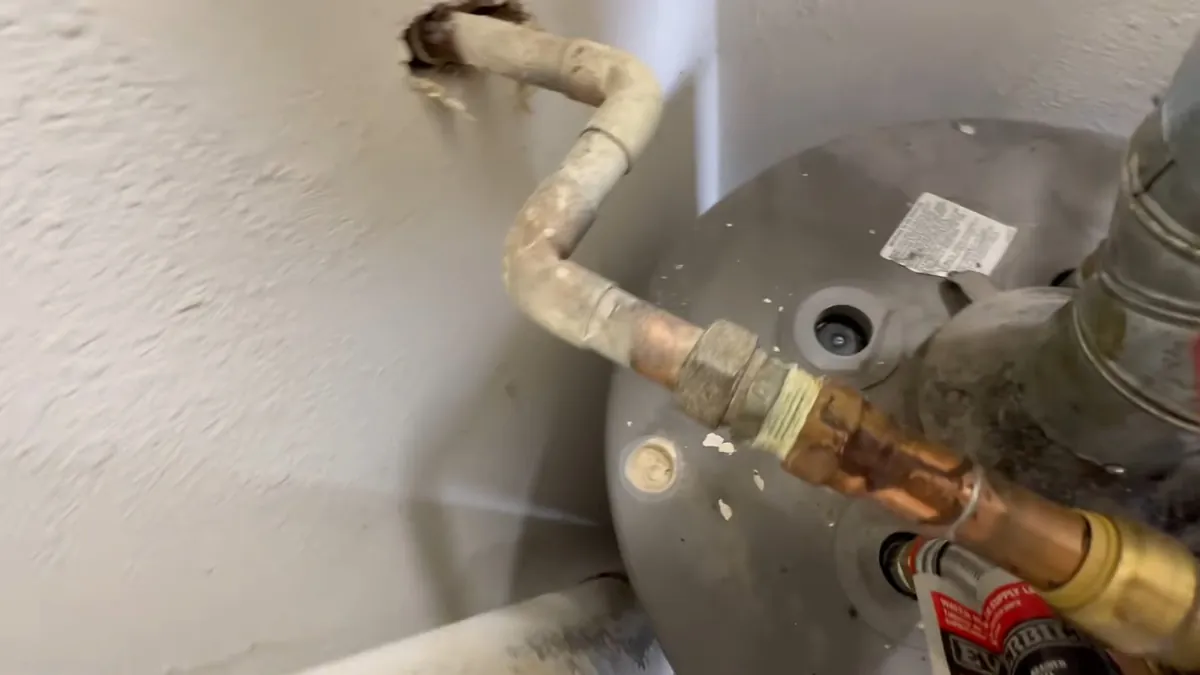
- Disconnect and remove. Supply lines, the vent and the gas or electric connection are separated and the old tank is carried out.
- Set and connect. The new unit is set on a pan, new connectors and shutoff valves go on and the vent or electrical connection is made.
- Test and inspect. The unit is filled and purged, the pressure relief valve and any expansion tank are checked and gas joints are tested before the inspector signs off.
A like-for-like swap often takes part of a day. Moving the heater, changing fuel or adding a vent takes longer, and the plumber should say so before starting.
Permit, code and the expansion tank
Permits for Monument and Palmer Lake run through the Pikes Peak Regional Building Department, and the same office serves Woodland Park. Ask the plumber to confirm who pulls the permit and when the inspector comes.
Code also covers the safety parts: a temperature and pressure relief valve with a discharge pipe, a vent that draws properly and, where the supply has a check valve or a pressure-reducing valve, an expansion tank to absorb the pressure that heated water creates. An expansion tank is a small tank on the cold line, and a water heater that keeps tripping its relief valve is often missing one.
Choosing who installs it
A good installer explains the choices without pushing one. Ask for the scope in writing, whether the permit is included, how the old unit is disposed of and what the workmanship terms are. Be wary of a quote that does not mention the permit, the vent or the expansion tank.
Gas water heaters depend on the gas supply, so the plumber should check the pipe size and the shutoff valve before connecting. The gas piping page covers repairs and new runs when the existing line is not suitable.
Want a heater sized for the household?
Sizing and small units
Capacity is measured in gallons for a tank and in flow rate for a tankless unit. The plumber compares the label on your old unit with how your household uses hot water, then recommends a size.
An undersink or point-of-use unit is a good fit for a distant sink and a poor fit for a whole house. Choosing between a tank and an on-demand unit is the subject of the tankless unit page.
When a tank has already failed and the house is without hot water, timing depends on availability and on whether a matching unit is on hand. The dispatch line on the home page takes the call at any hour.
Water heater replacement questions
What homeowners ask before a tank comes out.
My electric water heater is leaking. What should I do before the replacement?
Work through this short list: switch off the breaker for the heater, close the cold water shutoff above it, open a hot tap somewhere in the house to relieve pressure and place a bucket or towels under the leak.
One caution: do not drain the tank onto a finished floor without a hose to a drain. A leaking tank body cannot be repaired, so the plumber will talk about replacement once the water is stopped.
Should I replace a tank with a tank or switch to tankless?
Picture a family of five whose tank runs out during back-to-back showers. A larger tank or a tankless unit could both fix that, and the choice turns on the gas supply, the venting and how much hot water is used at the same moment.
A like-for-like tank swap is simpler and usually involves less piping change. Tankless means a different gas line size, a new vent and possibly a power outlet, so it is the larger project.
What should I ask an installer before hiring?
Before hiring: confirm the plumber is licensed and insured, and ask who will pull the permit. Ask what is included, such as the expansion tank, new shutoff valves, a drain pan and haul-away of the old unit.
Later: picking a brand and warranty details, as long as the capacity and fuel type are settled first.
How do gas, electric, hybrid and heat pump water heaters differ?
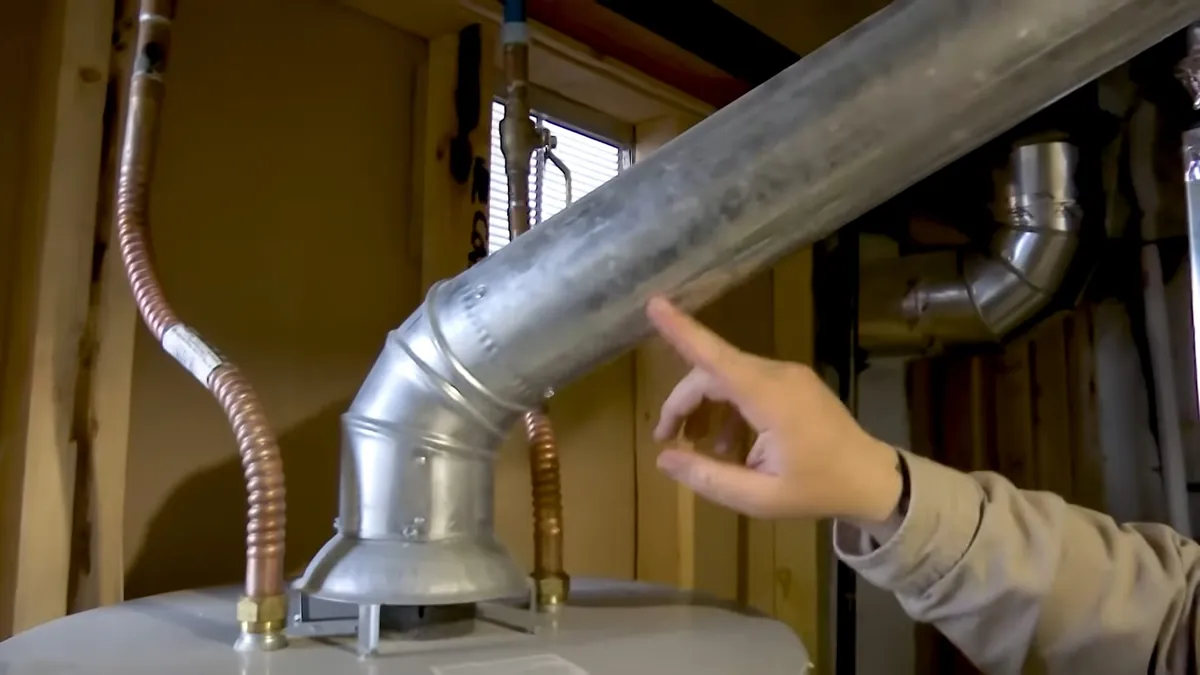
The visible clue is the fuel line. A gas heater has a gas pipe, a burner and a flue. An electric tank has a heavy power cable and no vent. A hybrid or heat pump unit looks like a tall electric tank with a fan and needs room to draw air and a condensate drain.
Causes of the differences come down to how the unit heats: flame, resistance element or a heat pump that moves warmth from the air.
Do I need a plumber for water heater installation?
Yes, in Colorado. State plumbing board guidance puts water heater replacement in the hands of a licensed plumber employed by a registered contractor, and the job goes through the local building authority for permits and sign-off.
The other option, doing it yourself or hiring a handyman, risks gas, venting and pressure mistakes and can leave the work without a required inspection.
Plan the replacement before the tank fails
- Licensed and insured plumbers
- Same-day service when available
- 24/7 emergency dispatch