
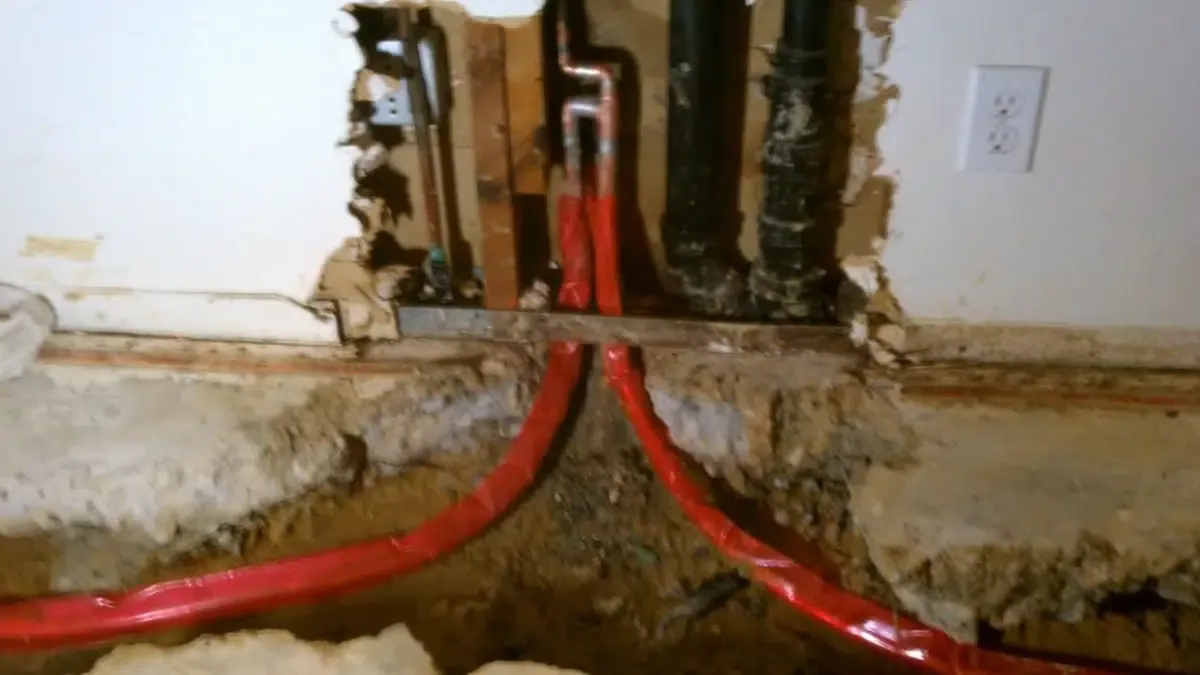
Spotting a system that is wearing out
A single leak is an event. A pattern is a diagnosis. Look at the whole house before deciding how much pipe to replace.
- Leaks that keep appearing in new places after each repair.
- Brown or yellow water when a tap is first opened.
- Pressure that is weak at several fixtures at once.
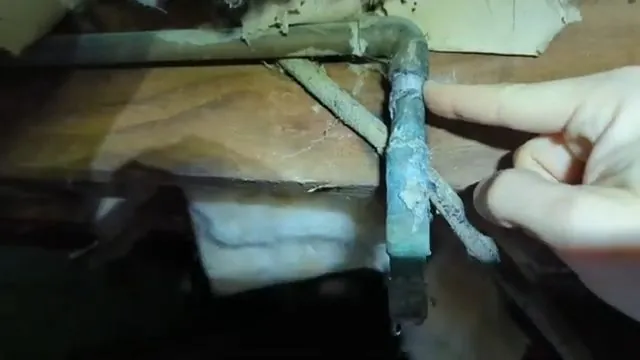
- Green or white crust at joints and along copper runs.
- Pinhole sprays or damp drywall with no matching appliance.
Safety note: A pipe that is actively spraying or a ceiling that is sagging with water calls for the main shutoff first. Turn it off, run a tap until the lines empty and stay away from wet light fixtures and outlets.
Repair a section or replace the run
| Situation | Usual choice | Reason |
|---|---|---|
| One leak in an otherwise sound line | Pipe repair | The surrounding pipe is in good shape |
| Several pinholes along one run | Replace that run | The pipe is failing along its length |
| Leaks at many places and water color problems | Whole-house repipe | The material is at the end of its life |
| Damage from a freeze | Repair the split and check the rest | Other sections may have cracked unseen |
Treating the symptom again and again wastes time and risks water damage each time. Once the plumber has seen the pipe up close, ask which side of the line your system falls on and why.
Pipes leaking in more than one place?
Pipe repair on a single run
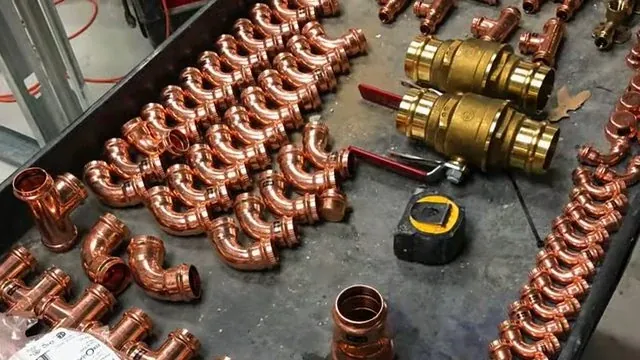
Spot repairs fit a line that is otherwise healthy. The plumber shuts off the water, drains the line, cuts out the damaged piece and joins new pipe with the right fittings for the material.
- Find and isolate. The failed section is located and the supply to it is closed.
- Cut and prepare. The damaged length is removed and the pipe ends are cleaned or deburred.
- Join. New pipe is connected with solder, crimp or push fittings suited to the material.
- Pressure check. Water is restored slowly and the repair is watched under full pressure.
Copper repairs often involve soldered joints, so the plumber checks for flammable material behind the wall before using a torch.
Whole-house repiping and pipe replacement
A repipe replaces the supply lines that feed the fixtures, usually from the main shutoff or the water heater outward. The work is planned room by room so water is off for as short a time as the job allows.
Copper is a durable, familiar choice that handles heat well. PEX is flexible and quick to install with fewer fittings. Rigid plastic types such as PVC and CPVC suit particular runs, cast iron is still found in older drain lines, and old galvanized steel and polybutylene are the usual candidates for replacement.
Water that carries sediment or discolors the first pull from a tap often traces to the line itself. If hardness is the culprit upstream, the softener and filtration page explains what treatment can and cannot do.
Galvanized and buried lines
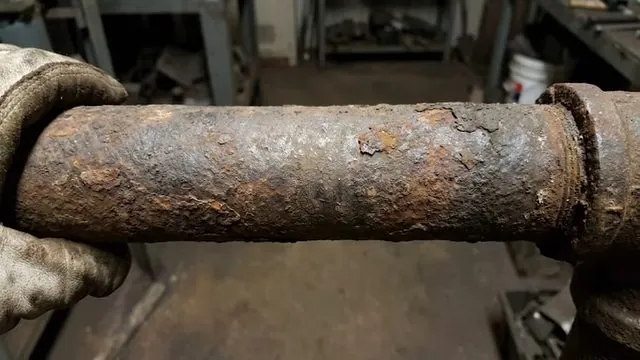
Galvanized steel corrodes from the inside, narrowing the bore until pressure drops and rust shows up in the water. Replacing it is usually a full-run job, because patching a corroded pipe tends to push the failure to the next fitting.
Lines under a slab or buried underground are harder to reach. A plumber may reroute new pipe through walls or the attic instead of breaking the floor, and the choice depends on layout and access.
Not sure whether to repair or repipe?
When a pipe bursts or freezes
Freeze damage tends to show up when thawing starts, and the failure may be a split along the pipe, not at a joint. A frozen run that has not cracked can sometimes be warmed slowly and saved, but a cracked one has to be cut out.
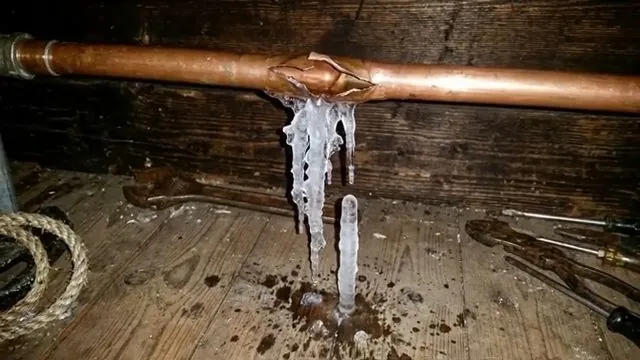
Cleanup after a burst is a separate job from the repair. The water damage help page covers removal and drying, and the home page dispatch line takes the first call if water is still running.
Repiping questions
Answers to the questions that come up before a pipe job.
How do I know if I need a whole-house repipe?
Do now: count the leaks. One failure in a healthy line is a repair. Repeated leaks in different spots, discolored water at every tap and pressure that drops even with the supply valve fully open all suggest the lines are wearing out together.
Later: choosing a pipe material, since the plumber should look at the system first and then recommend.
What is the difference between repairing a pipe and replacing it?
A repair cuts out the failed section and joins new pipe in its place. A replacement runs new pipe over a longer stretch or the whole route. A repair is the smaller job in the moment, and replacement makes sense when the pipe around the failure is in the same condition.
An example is a pinhole in a copper line. If the rest of the run is sound, a short repair holds, and if several pinholes show up, the pipe is failing along its length.
Which pipe material suits a repipe?
PEX and copper are the common choices. PEX bends around corners, which means fewer fittings and less opening of walls. Copper is rigid, lasts a long time and tolerates heat well. A plumber weighs access, budget and the water in your area.
Whatever is chosen has to be code-approved for potable water and installed under a permit where the local building office requires one.
Can pipes be fixed without opening the walls?
Sometimes. Access panels, crawl spaces and basement ceilings let a plumber reach many runs without cutting drywall. Hidden lines inside finished walls usually need a small opening, and a leak locator narrows down where.
The leak detection page describes how a leak is found before any cutting starts.
What should I do when a pipe bursts or freezes?
Close the main shutoff first, then open a tap at the lowest point to drain the lines. Switch off power to wet areas if you can do it safely, and take photos before cleanup begins.
A frozen pipe that has not split can sometimes be thawed slowly with warm air, never an open flame. One that has split must be cut out and replaced once the water is off.
How do I know if my house has galvanized pipes?
Galvanized supply pipe is dull gray steel and a magnet sticks to it. Scratch an exposed section lightly with a key: silver-gray metal points to galvanized, copper color means copper, and plastic is PEX or another polymer.
Rust-colored water, low pressure and orange stains at joints are the usual signs that galvanized lines are corroding from the inside.
Does homeowners insurance cover a burst pipe?
Coverage depends on the policy and the cause, so call the insurer early and ask what documentation they want. Photos before cleanup, the plumber's written findings and receipts for emergency steps all help.
The plumber can describe what failed and where, but whether it is covered is the insurer's decision.
Plan the pipe work before it turns into a flood
- Licensed and insured plumbers
- Same-day service when available
- 24/7 emergency dispatch