
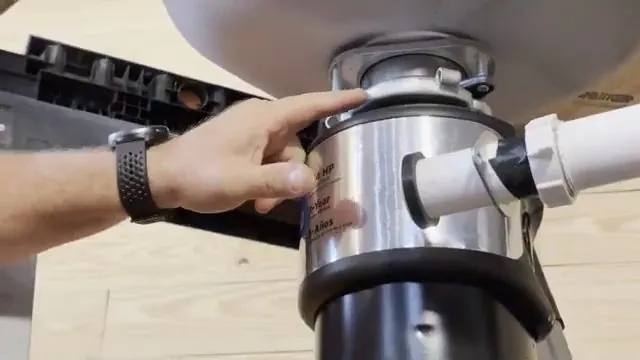
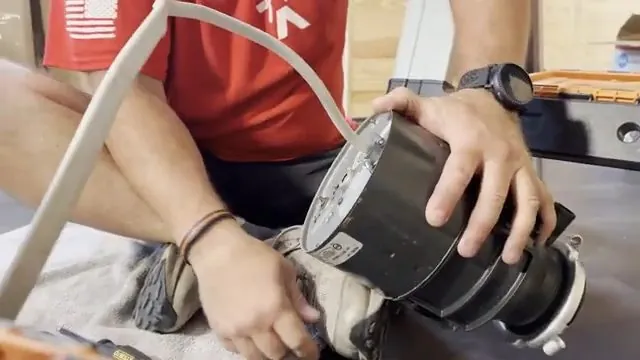
Jammed or humming disposal
A jam is the most common failure. The blades cannot turn, the motor strains and then trips the thermal overload.
- Cut the power. Turn off the wall switch and the breaker before any hand or tool goes near the unit.
- Loosen the blades. Seat a hex wrench in the socket under the unit and turn it back and forth until they turn easily.
- Clear the debris. Use tongs or pliers, never fingers, to remove what caused the jam.
- Reset and test. Press the red reset button on the bottom, restore power and run cold water as you test it.
Safety note: Never put a hand into a disposal, even when it is off. Cut the power at the breaker before working on it, and use tools to reach inside.
Disposal humming and not turning?
Clogged, slow or smelly disposals
A disposal that drains slowly is often blocked past the unit, in the trap or the drain line. Grease, coffee grounds and starchy food all collect and harden, and a plunger on the sink may not clear it.
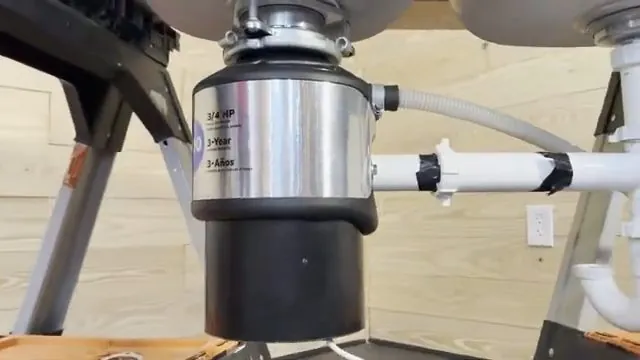
A bad smell comes from food residue on the grinding parts and in the drain. Cleaning helps, and a persistent odor can mean the line behind the unit is partly blocked.
- Run cold water before, during and after each use.
- Cut large scraps into smaller pieces.
- Keep grease, bones, pits and fibrous peels out of the unit.
- Do not pour chemical drain cleaners into a disposal.
Leaking disposal
| Leak location | Likely cause | Usual remedy |
|---|---|---|
| Top of the unit, at the sink | Worn flange seal or loose mounting | Reseat the flange with new putty or gasket |
| Side, near the drain pipe | Loose or worn drain connection | Tighten or replace the gasket |
| Side, near the dishwasher hose | A loose clamp or a cracked hose | Reconnect or replace the hose |
| Bottom of the housing | Internal seal or cracked housing | Replace the disposal |
A leak under a sink often involves the faucet and supply lines as well, and the fixture repair page covers those parts.
Time for a new disposal?
Disposal dead with no sound at all
A unit that does nothing when switched on is a different problem from a hum. With no sound, the cause is usually power: a tripped breaker, a tripped reset button or a switch that has failed. A dead outlet under the sink is another possibility.
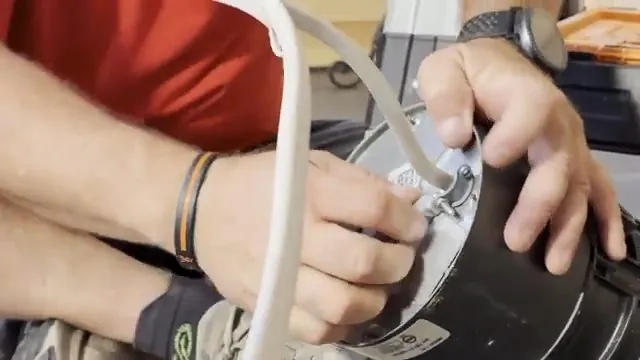
Check the reset button on the bottom of the unit first. If it pops back out immediately, the motor is overheating or shorted. Do not hold it in or keep pressing it, since a repeating trip points to a unit that needs attention.
Next the plumber checks the switch, the outlet and the wiring and then the motor. When the motor has failed or the wiring is damaged, replacement is the sensible route, and an electrician may be needed for the circuit.
- Check the breaker first, then the reset button.
- Listen for a hum, a click or silence and report which.
- Note whether the unit trips when the dishwasher drains.
- Do not open the unit housing yourself.
What belongs in a disposal and what does not
A disposal grinds soft food scraps and small bits, and it does not replace the trash. Hard, stringy and greasy items cause most service calls.
Fibrous items such as celery, corn husks and onion skins wrap around the blades. Starchy foods like rice, pasta and potato peels swell and form a paste that sticks in the trap. Grease cools and coats the drain line.
Run a good stream of cold water while the unit works and for several seconds after it stops, so the ground food moves into the drain line and does not settle in the trap.
Safety note: Never pour drain cleaner into a disposal or the sink above it. The chemicals sit in the unit and can splash, burn skin or damage the seals.
Installing or replacing a disposal
A replacement swaps the old unit for a new one on the same mounting. Installation of a first disposal adds an electrical connection and a drain connection, and the plumber checks that the sink and the trap suit the new unit.
Horsepower, feed type and noise level vary. A continuous-feed unit starts with a wall switch, and a batch-feed unit starts when the lid is placed. The plumber helps match the unit to the household and the sink.
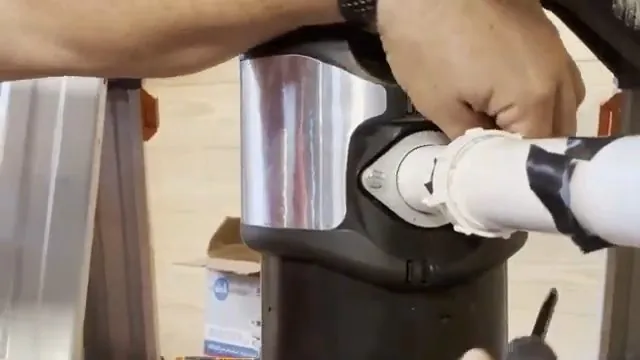
Connecting the dishwasher is part of the job. The drain hose attaches to a knockout port on the unit, and the plumber removes the knockout plug before the hose goes on, a step that is easy to forget.
Garbage disposal questions
What to try before and what to ask a plumber.
Why is my garbage disposal humming but not spinning?
A hum means the motor has power but the blades are stuck. A fork, bone, fruit pit or a pile of fibrous peel is usually the cause.
Switch it off at the wall switch and at the breaker, then look for the hex socket in the bottom of the unit. A wrench turned back and forth there can loosen the blades.
How do I stop a garbage disposal from leaking?
Find where the water shows up. A leak from the top is the sink flange. A leak from the side is the dishwasher hose or the drain connection, and a leak from the bottom usually means the housing has cracked.
A loose connection can be tightened. A cracked housing means a new unit.
What is a good rule for how long a disposal lasts?
Disposals last years with ordinary use, and the motor, the seals and the blades wear out in time. A unit that jams often, leaks or trips the reset button is a candidate for replacement.
A plumber can tell whether a repair is worth the time or whether a new unit is the better choice.
Fix the leak under the sink before it spreads
- Licensed and insured plumbers
- Same-day service when available
- 24/7 emergency dispatch